Level Up: The Psychology Behind Gamified Learning in K-12
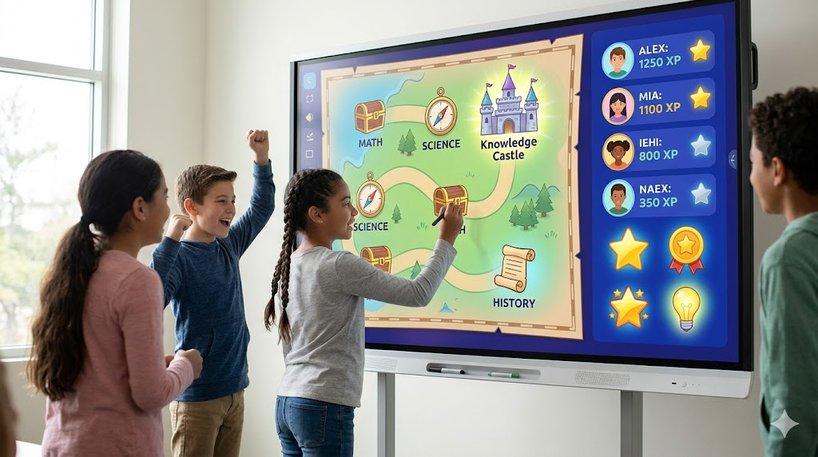
Level Up: The Psychology Behind Gamified Learning in K-12 In many modern classrooms, the traditional lecture is being replaced—or at least augmented—by something much more interactive. Stu
1. The Dopamine Loop: Reward and Reinforcement
At the heart of gamification is the brain's reward system. When a student completes a task and receives immediate feedback—like a badge, a celebratory sound, or a climbing rank on a leaderboard—the brain releases dopamine.
- Immediate Gratification: Unlike a traditional test that might take a week to be graded, gamified platforms provide instant feedback.
- The "Near Miss" Effect: In games, failing isn't an end; it’s a prompt to try again. This keeps students in a state of "optimal challenge," where the goal feels just within reach.
2. Self-Determination Theory (SDT)
Psychologists Richard Ryan and Edward Deci’s Self-Determination Theory suggests that humans are driven by three innate needs. Gamification hits all three:
- Autonomy: Students often get to choose their path, their "avatar," or which challenges to tackle first, giving them a sense of control over their learning.
- Competence: As students progress through levels that gradually increase in difficulty, they gain a tangible sense of mastery.
- Relatedness: Many gamified systems include social components, like team quests or peer-to-peer competitions, fulfilling the need for social connection.
3. The Power of "Low-Stakes" Failure
One of the biggest hurdles in K-12 education is the fear of failure. In a traditional setting, a bad grade can feel permanent. In a gamified environment, "failing" a level is simply part of the loop.
This shifts the student's mindset from a fixed mindset ("I’m bad at math") to a growth mindset ("I just need to find the right strategy to beat this level"). It encourages risk-taking and persistence—traits that are vital for long-term academic success.
4. Scaffolding and Flow
The best educational games keep students in a state of Flow—a psychological state where a person is so involved in an activity that nothing else seems to matter.
To maintain flow, the challenge must perfectly match the student’s skill level. If it’s too easy, they get bored; if it’s too hard, they experience anxiety. Gamified learning uses "scaffolding" to build skills incrementally, ensuring the student is always challenged but never overwhelmed.
The Takeaway
Gamification isn't a "gimmick" to distract students; it’s a method of aligning educational goals with how the human brain naturally learns and stays motivated. By turning the classroom into an arena of discovery, we help students become the heroes of their own educational journeys.
No comments yet. Login to start a new discussion Start a new discussion